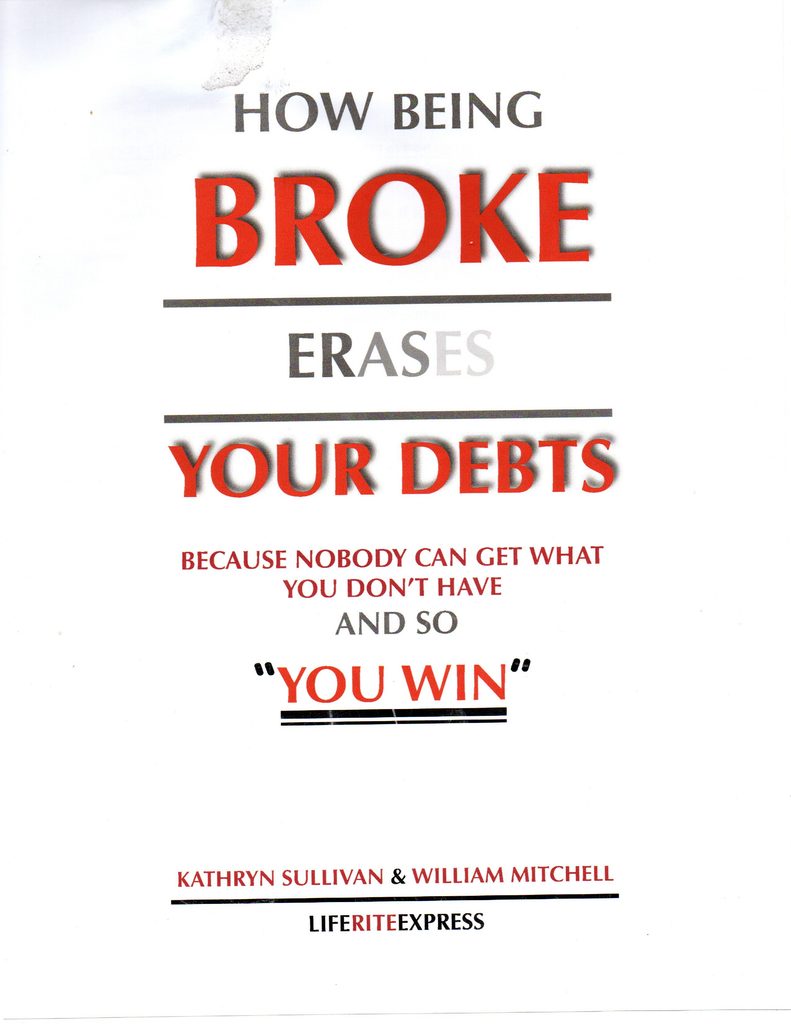
How Being Broke Erases Your Debts
Discover How Being Broke Can Change Your Financial Leverage Against Debt Collectors
By Kathryn Sullivan and William Mitchell
How Being Broke Erases Your Debts challenges conventional thinking about debt collection and financial hardship. The authors explore how having limited financial resources can change the balance of leverage between consumers and creditors.
Through provocative observations and unconventional perspectives, the book examines debt collection practices, bankruptcy, financial obligations, and the legal protections that may be available to people facing serious financial difficulties.
Readers will discover a different perspective on financial survival, debt collection, and taking greater control of their financial future.
Coming Soon — Currently in Development
About the Book
How Being Broke Erases Your Debts explores an unconventional approach to understanding debt, financial hardship, and the relationship between consumers and creditors.
Authors Kathryn Sullivan and William Mitchell examine how financial circumstances can affect the leverage creditors have when attempting to collect outstanding debts.
The book challenges readers to reconsider traditional assumptions about financial security, bankruptcy, debt collection, and the legal options available to individuals experiencing serious financial difficulties.
Through provocative arguments and practical perspectives, the authors encourage readers to become better informed about their rights, financial obligations, and options for navigating debt-related challenges.
What You’ll Discover
How Being Broke Erases Your Debts explores several controversial financial and legal topics, challenging conventional assumptions about debt collection and the options available to people experiencing financial hardship.
- Debt Collection and Financial Leverage: How financial circumstances can influence the relationship between debtors and creditors.
- Bankruptcy and Alternatives: Exploring the authors’ views on bankruptcy and other approaches to managing debt.
- Consumer Credit: How credit card debt and borrowing practices can affect long-term financial stability.
- Employment and Financial Security: Examining the relationship between employment, income, and financial obligations.
- Taxes and Collection Limits: Discussing the time limitations and legal considerations surrounding certain tax debts.
- Consumer Rights: Understanding the legal protections that may apply when creditors attempt to collect outstanding debts.
- Financial Independence: Exploring the authors’ unconventional perspectives on building a more secure financial future.